Bathroom Remodel Costs: What Homeowners Are Actually Paying in 2025
A bathroom remodel is one of the most popular home improvement projects — and one of the most variable in cost. A basic refresh can run $5,000. A full gut-and-rebuild can top $30,000. Here's what homeowners are actually paying and where the money goes.
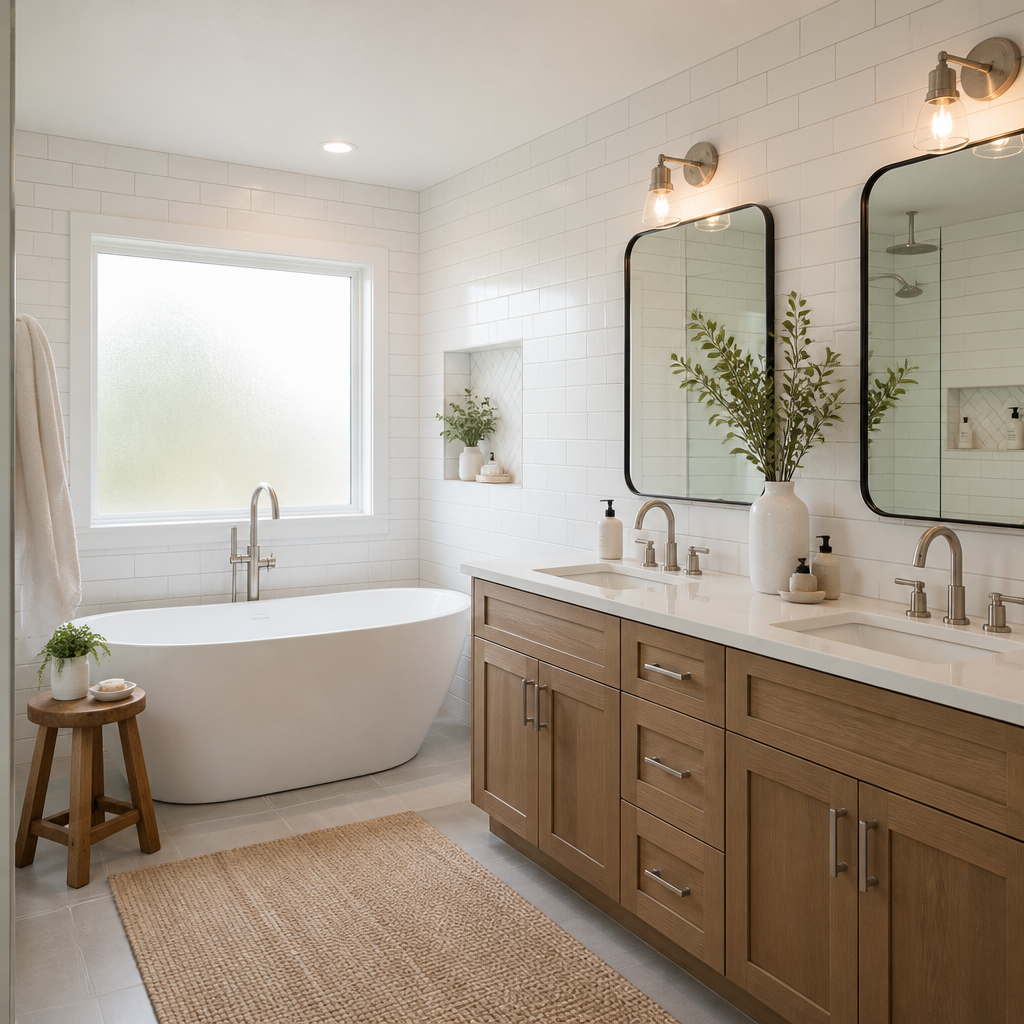
A bathroom remodel is one of the most popular home improvement projects — and one of the most variable in cost. A basic refresh can run $5,000. A full gut-and-rebuild in a master bath can top $30,000 or more.
The gap between those numbers comes down to choices: how much you’re changing, what materials you’re using, whether you’re moving plumbing, and who’s doing the work. This guide breaks down what homeowners are actually paying, where costs pile up, and how to get the most out of your budget.
🛁 Planning a bathroom remodel?
Compare quotes from local contractors — free, no commitment.
Average Bathroom Remodel Costs by Scope
Here’s what homeowners typically spend based on project scale:
- Minor refresh (cosmetic only): $2,500–$8,000 — new fixtures, paint, vanity swap, updated lighting
- Mid-range remodel: $10,000–$20,000 — new tile, tub/shower replacement, vanity, toilet, updated plumbing connections
- Full gut renovation: $20,000–$40,000+ — complete tear-out, layout changes, new plumbing runs, custom tile, high-end fixtures
- Master bath luxury remodel: $40,000–$80,000+ — wet rooms, heated floors, custom cabinetry, premium finishes throughout
The national average for a full bathroom remodel sits around $11,000–$18,000, according to recent contractor data. But local labor rates and material choices can move that number significantly in either direction.
Where the Money Actually Goes
Labor (40–65% of total cost)
This is typically the largest single expense. A bathroom remodel involves multiple trades — plumbers, electricians, tile setters, and general contractors — often working in sequence. Labor costs vary widely by region, with metro areas running 30–50% higher than rural markets.
Expect to pay $50–$150/hour for skilled trades, and $75–$200/hour for general contractors managing the full project.
Tile and Flooring (10–20%)
The cost range here is enormous. Basic ceramic tile starts around $1–$3 per square foot. Porcelain runs $3–$10. Natural stone (marble, travertine, slate) can hit $15–$50+ per square foot before installation. Labor for tile installation adds $5–$15 per square foot on top.
For a 50-square-foot bathroom floor, you’re looking at anywhere from $300 (DIY, basic tile) to $3,000+ (installed natural stone).
Vanity and Sink (8–12%)
A stock vanity from a big-box store starts at $200–$600. Semi-custom runs $800–$2,500. Custom-built cabinetry with a stone top can easily reach $3,000–$8,000+. Installation adds $200–$600 on top of the unit cost.
Tub and/or Shower (15–25%)
This is where costs diverge most sharply depending on what you’re installing:
- Alcove tub (standard): $400–$1,500 + installation
- Freestanding soaking tub: $800–$5,000+
- Walk-in shower (tile): $2,000–$8,000 installed
- Walk-in shower (custom, curbless): $4,000–$15,000+
- Tub-to-shower conversion: $1,200–$8,000 depending on scope
Toilet (3–7%)
A standard two-piece toilet runs $200–$500. Comfort-height models (recommended for accessibility and aging-in-place) are $250–$700. High-end elongated or bidet-combo units can reach $1,000–$2,000+. Installation typically adds $150–$400.
Plumbing Changes (variable — can add $1,000–$8,000+)
If you’re moving the toilet, relocating the shower, or adding a second sink, expect a significant cost increase. Moving a drain even 3 feet can require opening the subfloor and re-routing pipes — a job that can run $1,500–$5,000 or more depending on access and configuration.
🏠 Get accurate quotes for your bathroom project
Local contractors, free estimates, no obligation. Takes 2 minutes.
Hidden Costs That Catch Homeowners Off Guard
Water Damage Behind Walls
This is the most common budget-buster. Once tile comes off an old shower wall, contractors regularly find rotted backer board, mold, or damaged framing underneath. Remediation can add $500–$5,000 depending on how far it spread and whether it reached structural elements.
Permit Fees
Most full bathroom remodels require permits, particularly if plumbing or electrical work is involved. Permit costs vary by municipality — typically $100–$500 for a bathroom project — but inspections can add time and occasionally require changes to work already done.
Ventilation Upgrades
Older bathrooms often have undersized or missing exhaust fans. Code requires adequate ventilation in wet areas, and a quality fan-light combo runs $80–$350 plus installation. If your current fan vents into the attic rather than outside (a common issue in older homes), correcting that adds another $150–$400.
Subfloor Damage
If a toilet has been leaking at the base for years, or tile grout has been failing, water damage to the subfloor is common. Replacing a bathroom subfloor adds $500–$1,500 depending on size and access.
How to Control Costs Without Cutting Corners
- Keep the layout: Moving plumbing is expensive. If you can live with the existing footprint, you’ll save thousands.
- Spend on what you touch daily: Prioritize the shower and vanity. Save on less-visible elements like ceiling paint or door hardware.
- Get 3 quotes minimum: Contractor pricing varies significantly. The lowest bid isn’t always the best, but you need the range to negotiate effectively.
- Stage the work if budget is tight: Do structural work now, upgrade finishes later. A solid tile and plumbing job can be dressed up in two years without redoing everything.
- Avoid mid-project changes: Every change order costs money. Make decisions before work starts, not during.
What Returns the Most at Resale
According to Remodeling Magazine’s Cost vs. Value report, a mid-range bathroom remodel returns roughly 60–70 cents on the dollar at resale. Upscale remodels return slightly less — around 55–65%.
That doesn’t mean remodeling isn’t worth it — you also get years of enjoyment from an improved space — but it does mean the best financial case for a bathroom remodel is in homes that are clearly dated, where a refresh removes a buyer objection rather than adding a luxury feature.
Practical upgrades (replacing a cracked tub, updating a 1990s vanity, adding a walk-in shower where only a tub existed) tend to return more than pure luxury additions in most markets.
Questions to Ask Every Contractor Before You Sign
- What’s included and what’s not? — Get a detailed line-item breakdown, not just a total number.
- How do you handle surprises like water damage? — Ask for their process and how additional costs are priced and approved.
- Are you pulling permits for this job? — If they say no for work that requires one, walk away.
- Who will actually be doing the work? — Some GCs subcontract everything. Know who’s in your home.
- What’s the payment schedule? — Never pay more than 10–30% upfront. Avoid contractors who want full payment before work starts.
🛁 Ready to Start Your Bathroom Remodel?
Compare quotes from local licensed contractors — free inspections, no commitment required.
Takes less than 2 minutes. Local licensed pros.
The Bottom Line
A bathroom remodel can be one of the most satisfying home improvements you make — or one of the most frustrating, if you go in without a realistic budget and a clear plan.
Know your scope before you get quotes. Understand that surprises are common and build in a 15–20% contingency. And don’t skip the step of comparing at least three bids — the spread in contractor pricing for the same job is often wider than most homeowners expect.
The best first step is simple: get free quotes from local contractors so you know what your specific project will actually cost in your market.
Why you can trust us
The Friday Journal compares lenders and services independently. We don't accept payment for favorable coverage, and our recommendations are based on cost, terms, and real-world fit. When you use our links we may earn a commission — it never changes what we recommend or where a product ranks.