






A decade ago, the idea of ordering prescription glasses online seemed risky to many consumers. Eyewear was traditionally viewed as something that required an in-person experience-trying on frames, speaking with an optician, and making purchasing decisions inside a retail store.
Today, buying glasses online has become increasingly common. Millions of shoppers purchase prescription eyewear from online retailers every year, attracted by competitive pricing, broader frame selections, and the convenience of shopping from home.
If you’ve never ordered glasses online before, the process may feel intimidating. Questions about prescriptions, measurements, lens options, and frame fit are completely normal.
The good news is that buying glasses online is often much simpler than first-time shoppers expect.
This guide walks through everything you need to know before placing your first order.
Step 1: Start With a Current Prescription
Before purchasing prescription glasses online, you’ll need a valid prescription from an eye care professional.
A typical prescription contains information such as:
- Sphere (SPH)
- Cylinder (CYL)
- Axis
- Addition (ADD) for multifocal lenses
These measurements tell the lens manufacturer exactly how to create lenses that match your vision needs.
If your prescription is outdated, consider scheduling an eye exam before ordering new glasses.
Accurate prescriptions are the foundation of a successful eyewear purchase.
Step 2: Understand Pupillary Distance (PD)
One of the most common concerns among first-time online shoppers is pupillary distance, often called PD.
PD measures the distance between the centers of your pupils.
This measurement helps ensure lenses are aligned correctly with your eyes.
Some prescriptions include PD automatically, while others do not.
If your PD isn’t listed, you can often:
- Request it from your eye care provider
- Measure it using online tools
- Use retailer-provided guides
Fortunately, many online eyewear companies have made this process straightforward.
Step 3: Learn the Different Types of Lenses
Not all prescription lenses are the same.
Understanding your options helps prevent confusion during checkout.
Single-Vision Lenses
The most common lens type.
Designed to correct:
- Nearsightedness
- Farsightedness
- Astigmatism
Reading Glasses
Designed primarily for close-up activities such as reading and computer use.
Progressive Lenses
Provide multiple viewing zones within one lens.
Useful for individuals who need assistance seeing at varying distances.
Non-Prescription Lenses
Used for fashion eyewear or blue light filtering purposes.

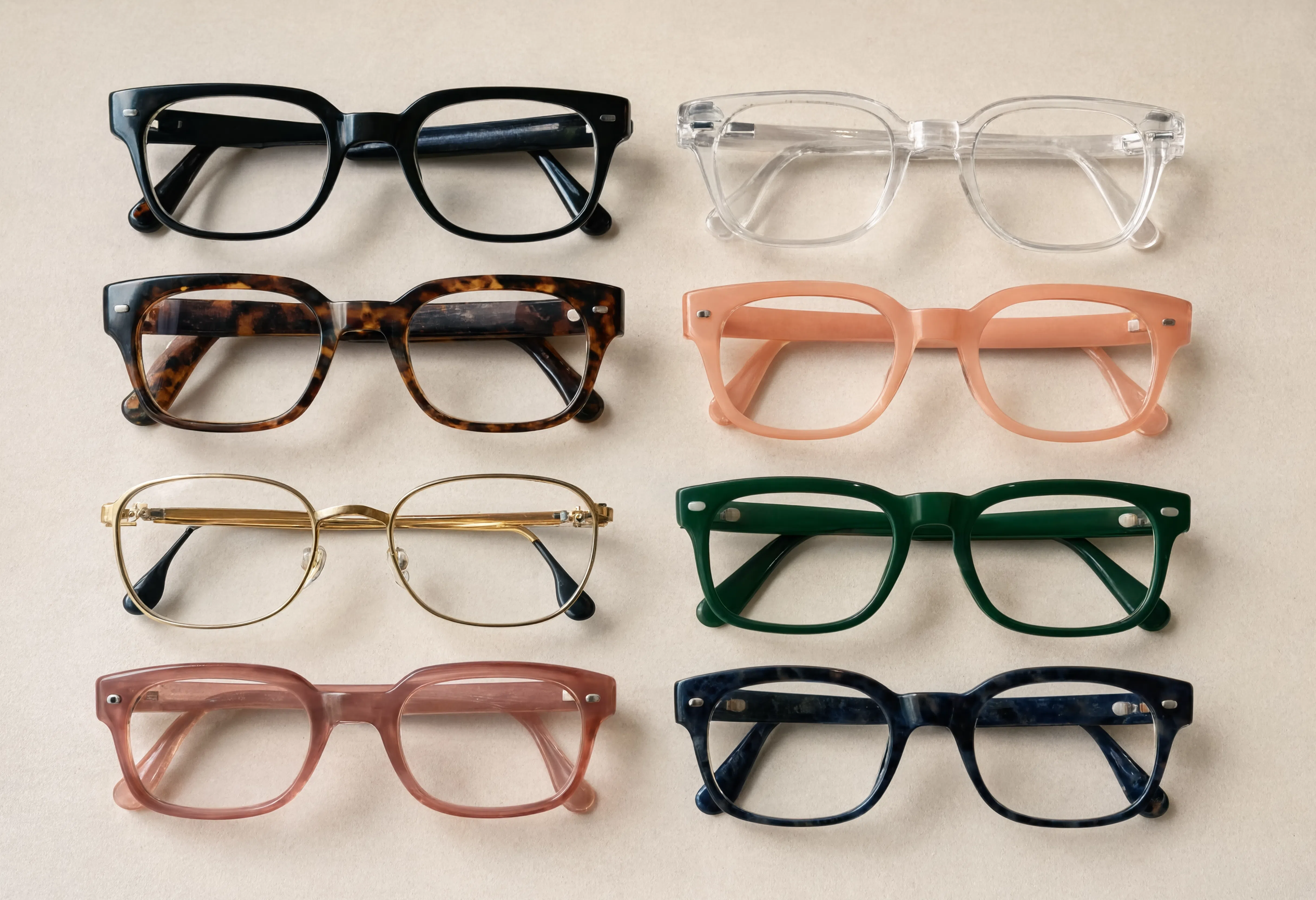
Step 4: Choose Frames That Fit Your Face
Frame selection is often the most enjoyable part of the process.
Online retailers typically offer hundreds or even thousands of styles.
Popular frame categories include:
Rectangular Frames
Clean and professional appearance.
Round Frames
Classic and stylish.
Cat-Eye Frames
Fashion-forward and distinctive.
Oversized Frames
Bold and expressive.
Rimless Designs
Minimalist and lightweight.
When evaluating frames, pay attention to dimensions rather than appearance alone.
Key measurements include:
- Lens width
- Bridge width
- Temple length
These specifications help determine overall fit.
Step 5: Consider Your Face Shape
Although personal preference matters most, some shoppers use face shape as a starting point.
Round Faces
Often pair well with angular frames.
Square Faces
Frequently complement softer frame designs.
Oval Faces
Generally compatible with a wide variety of styles.
Heart-Shaped Faces
Often balance well with lighter frame designs.
Remember that these are guidelines, not rules.
Comfort and confidence matter more than strict styling formulas.
Step 6: Understand Lens Upgrades
During checkout, you’ll likely encounter several optional upgrades.
Common choices include:
Anti-Reflective Coating
Reduces glare and reflections.
Scratch-Resistant Coating
Helps protect lenses from everyday wear.
UV Protection
Provides additional protection from ultraviolet rays.
Blue Light Filtering
Popular among people who spend significant time using digital screens.
Not every upgrade is necessary for every shopper, but understanding the options helps you make informed decisions.
Step 7: Use Virtual Try-On Tools
Many online eyewear retailers now offer virtual try-on technology.
These tools allow you to:
- Upload a photo
- Use a webcam
- Preview different frame styles
While virtual tools aren’t perfect, they can help narrow down options and improve confidence during the selection process.
Step 8: Double-Check Your Order
Before submitting your purchase:
Verify:
- Prescription details
- Pupillary distance
- Lens selection
- Frame color
- Shipping information
Most ordering mistakes occur during data entry, making this final review extremely important.
Common First-Time Concerns
Will My Prescription Be Accurate?
If entered correctly, lenses are manufactured according to the prescription you provide.
What If I Choose the Wrong Frame?
Many retailers offer return policies or satisfaction guarantees.
Are Online Glasses Good Quality?
Quality varies by retailer, just as it does with traditional stores. Reading product descriptions and customer reviews can help set expectations.
How Long Will Shipping Take?
Production and shipping times vary depending on prescription complexity and retailer policies.
Final Thoughts
Buying glasses online for the first time may seem unfamiliar, but the process is generally straightforward once you understand the basics. With a current prescription, accurate measurements, and a little research, many consumers find that ordering eyewear online is both convenient and cost-effective.
The key is to take your time, understand your options, and verify your information before placing an order. Once you’ve completed your first purchase, future orders often become even easier, especially if you already know which frame styles and lens options work best for you.